
KALRO expands rice seed production as Kenya targets self-sufficiency by 2032
KALRO has begun the first phase of a rice seed production project in Kirinyaga, as the government pursues a longer-term target of reducing reliance on imported rice.
9 November 2026 · 2 min read
KALRO Expands Rice Seed Production as Kenya Targets Self-Sufficiency by 2032
The Kenya Agricultural and Livestock Research Organization (KALRO) has started the first phase of a project to expand certified rice seed production in Kirinyaga County, in an effort to improve farmers' access to quality planting materials and support local rice production.
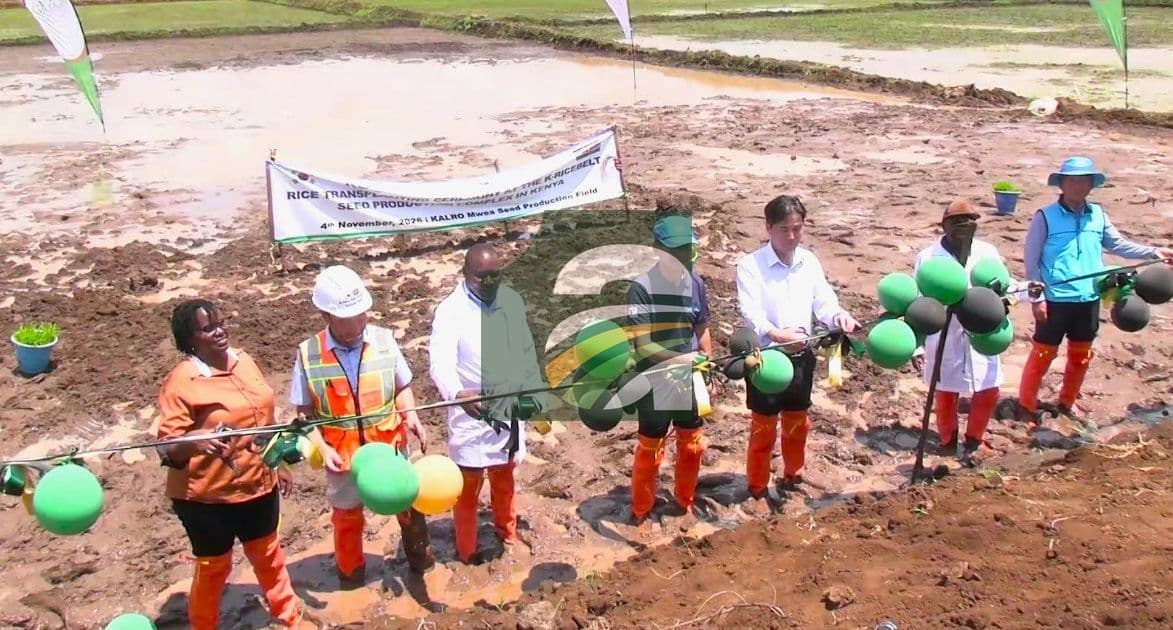
The project is being implemented at KALRO's Mwea Centre, where 7.2 hectares have been opened for the initial phase of a planned 65-hectare rice seed production complex.
The first transplanting exercise took place at Kirogo Farm, marking the start of production activities under the initiative, which is receiving technical support from South Korea through the Korea Partnership for Innovation of Agriculture (KOPIA).
KALRO Director of Crop Production and Seed Systems Benjamin Kivuva said the organization intended to increase certified rice seed production from 152 metric tones to approximately 450 metric tones.
He said the increase would help address shortages of certified rice seed that have limited farmers' ability to improve production.
KALRO Industrial Crops Research Institute Director Ruth Musila said about 38 acres had been developed so far, with transplanting taking place on approximately 18 acres during the current phase.
The organization is promoting improved rice varieties, including Kwomboka. Musila said some of the varieties could produce between six and seven tones per hectare under suitable conditions.
The project is also intended to support mechanized rice seed cultivation. KOPIA Director JiGang Kim said the partnership had supported the development of the fields and was targeting production of 330 metric tonns of certified seed this year.
The initiative comes as Kenya seeks to reduce its reliance on imported rice. Kivuva said the country imports about 70 per cent of its rice, while domestic production accounts for approximately 25 per cent.
He said the government had a target of achieving rice self-sufficiency by 2032, adding that expanding local seed availability, irrigation and cultivated land would be important to reaching that goal.
However, increased seed production alone will not guarantee higher national output. Farmers will also need access to suitable land, water, affordable inputs and reliable markets.
Kamadi
More stories by Kamadi