




Brazil and China partner to develop artificial intelligence tools for family farming
Brazil's agricultural research agency has signed a five-year cooperation agreement with Chinese institutions to develop artificial intelligence, digital agriculture and machinery solutions aimed at supporting family farmers.
13 November 2026 · 2 min read
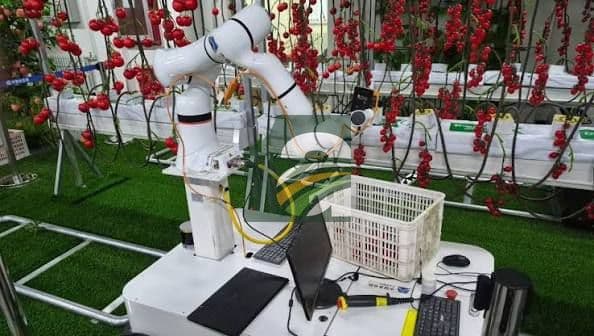
Brazil and China partner to develop artificial intelligence tools for family farming
Brazil's agricultural research agency Embrapa has entered a five-year cooperation agreement with Chinese institutions to develop artificial intelligence and digital agriculture solutions aimed at improving technology access among family farmers.
The memorandum of understanding brings together Embrapa, Nanjing Agricultural University, the Jiangsu Academy of Agricultural Sciences, Sinomach Digital Technology Corporation and the International Association for People's Cooperation.
The agreement was signed in Nanjing, China, in September 2026 and provides for joint research, researcher exchanges and the establishment of pilot centers for smart agricultural machinery in Brazil.

The cooperation will focus on digital agriculture, automation, robotics and artificial intelligence, with particular attention to technologies that can be adapted to the needs of family farming.
Planned activities include research into smart machinery, digital platforms and crop models, alongside technical missions, training programs and efforts to secure research funding.
One of the expected outcomes is the establishment of Smart Agricultural Machinery Service Centers that could provide small and medium-sized machines, sensors, Internet of Things equipment and artificial intelligence tools to farmers.
The proposed centers would operate through collective service arrangements involving family farming associations and cooperative organizations.
The model is intended to address the cost barrier that often prevents smaller producers from purchasing advanced machinery and digital technologies individually.
By organizing access through shared services, the institutions hope to strengthen farmers' ability to monitor production, manage operations and use technology more effectively.
Embrapa President Silvia Massruhá said the partnership would support the development of more sustainable, resilient and inclusive food systems.
The agreement also provides for the possibility of integrating demonstration units into Brazil's National Program for Technical Assistance and Rural Extension.
The partnership reflects a wider effort to make agricultural innovation more accessible beyond large commercial farms.
However, the impact of the initiative will depend on how the pilot centers are implemented, the cost of accessing their services and whether the technologies can be adapted to different farming conditions.
For family farmers, the success of the program will ultimately depend on whether the equipment and digital tools improve productivity without introducing costs that outweigh the benefits.
Kamadi
More stories by Kamadi