

Burundi researcher highlights how earthworms can turn farm waste into organic compost
A Burundian researcher is highlighting vermicomposting as a way to convert agricultural and food-processing waste into organic compost, offering farmers another option for managing farm residues.
22 November 2026 · 2 min read
Burundi researcher highlights how earthworms can turn farm waste into organic compost
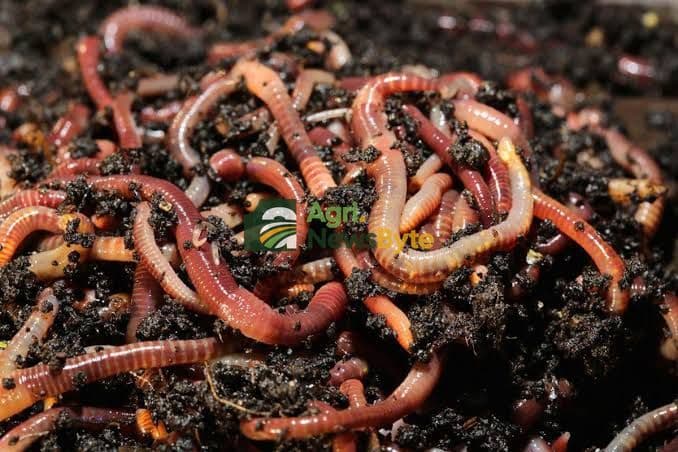
A Burundian researcher has highlighted the potential of earthworms to convert agricultural and food-processing waste into organic compost, offering farmers an alternative way to manage farm residues and produce soil nutrients.
Eric Kazitsa, a researcher at Burundi's École normale supérieure, explained how vermicomposting uses earthworms and microorganisms to break down organic material into a nutrient-rich product known as vermicompost.
The process involves three main stages: pre-composting, active decomposition and maturation.
During pre-composting, organic materials are prepared before being introduced to the earthworms. Kazitsa recommends drying residues to increase their carbon content, while adding cow dung can provide nitrogen to the mixture.
The active decomposition stage involves earthworms and microorganisms breaking down the material. The resulting worm castings are then allowed to mature before the compost is ready for use.
Kazitsa also cautioned that the composition of the material matters. Acidic waste, including citrus residues, may need to be avoided or treated before being added to the composting system.
The researcher said earthworms perform best in material with a pH level between six and eight.
The approach could be useful in agricultural communities where crop residues and food-processing waste are available but are not fully utilized.
Instead of discarding organic material, farmers and processors can potentially use it as an input for compost production. This may also help reduce the amount of biodegradable waste left unmanaged.
Kazitsa further highlighted the reproductive potential of well-maintained earthworm stocks, saying a worm can produce eggs several times a week and generate more than 20 individuals within a month under suitable conditions.
However, the practical value of vermicomposting will depend on factors such as the availability of suitable organic material, access to earthworms, labour requirements and the quality of the final compost.
For farmers considering the method, further guidance on production costs, application rates and crop response would help establish whether it can be adopted economically at different farm scales.
The research discussion adds to wider interest in organic waste management and soil improvement practices that can support more sustainable agricultural production.
Kamadi
More stories by Kamadi